
Correctly using a marine radio doesn’t just come in handy on rocky waters; it is a legal requirement that ensures the safety of you and your entire crew. By completing a marine radio course, you can become equipped and qualified to operate at sea with both a MF/HF and VHF radio licence.
Safety and Rescue
A mobile phone may be a useful backup, but nothing can substitute a marine radio in an emergency. Not only does it keep you up-to-date with weather and navigational warnings, but it is also your lifeline in life-threatening situations.
Marine radios aren’t just important once danger has struck; they can be used from the moment you enter the water. Skippers can prevent and prepare for potential risks by ‘logging on and off’ with local rescue groups. By logging on, it ensures someone is always aware of your location. If you don’t return by the estimated time you provide, or fail to log off, the marine group will take action, bringing you back to safety. The marine radio course takes you through this process, making sure you are comfortable and confident with communication protocols.
‘Mayday’ distress calls can be made on marine radios in times of grave and imminent danger. These are prioritised over all other calls, immediately attracting the attention of land stations and vessels. ‘Pan Pan’ urgency calls are for situations that may not justify a distress call but still concern the safety of the vessel and those onboard. This allows rescue teams to reach you in medical emergencies or mechanical breakdowns. Misuse or error during a call like this can delay assistance, strip valuable resources from those in need, and result in severe legal consequences. It is imperative that your crew be trained and tested on these signals and frequencies—it may just save your life.
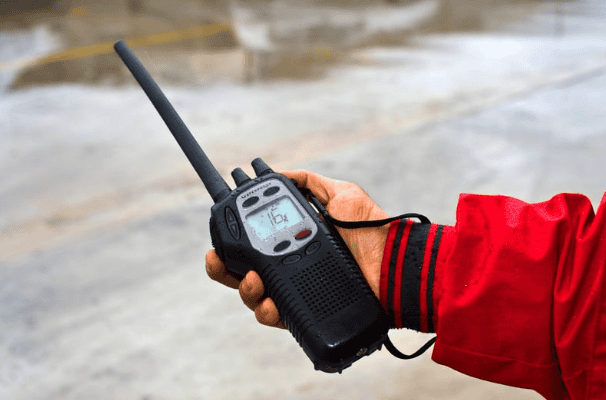
Communication Between Vessels
With a radio licence, you won’t just be protecting yourself in an emergency; you will be keeping others afloat. By using your radio to stay in contact with other vessels, you can efficiently come to each other’s aid.
Skippers can make preemptive ‘safety calls’ to broadcast warnings to stations and other watercraft. Although safety calls are often made by coast stations or rescue crews, it is critical that vessels are able to report any floating objects, weather warnings or abnormal activity.
Radio Requirements
When it comes to marine safety, everyone needs to be equipped and ready. A VHF or MF/HF radio is legally required for all registrable vehicles in WA operating beyond 4 nautical miles from shore. This can include personal watercraft, sailing vessels, and any boat that can be propelled by mechanical power. Even if your vehicle is not registered, it is recommended by WA’s Department of Transport that you obtain a radio for your own security.
Our Radio Courses
At iiCAPTAIN, we realise just how important it is to be qualified and confident on the water. You cannot cut corners when it comes to marine safety. Our Perth Boat School makes the radio licence process simple. Through our thorough and efficient courses, you can obtain a licence for VHF marine radios by completing a Short Range Operator Certificate of Proficiency (SROCP). This is a legal requirement for any boat that has a VHF radio onboard.
To qualify for MF/HF radios, you must obtain a Long Range Operator Certificate of Proficiency (LROCP). This requires you to confidently use VHF and MF/HF radios.
We believe in preparing you outside of a traditional classroom. You will be provided with online access to the Office of Maritime Communications’ VHF handbook to study on your own terms. For extra training and practice, you can complete the additional revision questions on the OMC website. When you feel ready, book in and visit the Woodman Point location to sit a 25-question multiple-choice exam. In less than an hour, you will be ready to go, awaiting your licence from the OMC.
Choose iiCAPTAIN to stay prepared, ready and licensed on the water—we do all the hard work for you.